Where Visibility Sits
In a culture saturated with images, visibility can seem straightforward. To be visible appears to mean simply to be present.
I brought these works together because they made me think about visibility as something beyond an artistic problem. Looking at them, it becomes clear that being seen is never simple. In life we are constantly aware of how we appear to others, sometimes exposed, sometimes guarded, sometimes shaped by the situation around us. Each artist seems to place that tension somewhere different. In one it sits inside the person depicted, in another it shifts to the viewer, then to the surrounding conditions, and finally to the figure’s own control over its image. Together they suggest that visibility is not just about what appears in front of us, but about how presence is negotiated, managed, and never entirely settled.
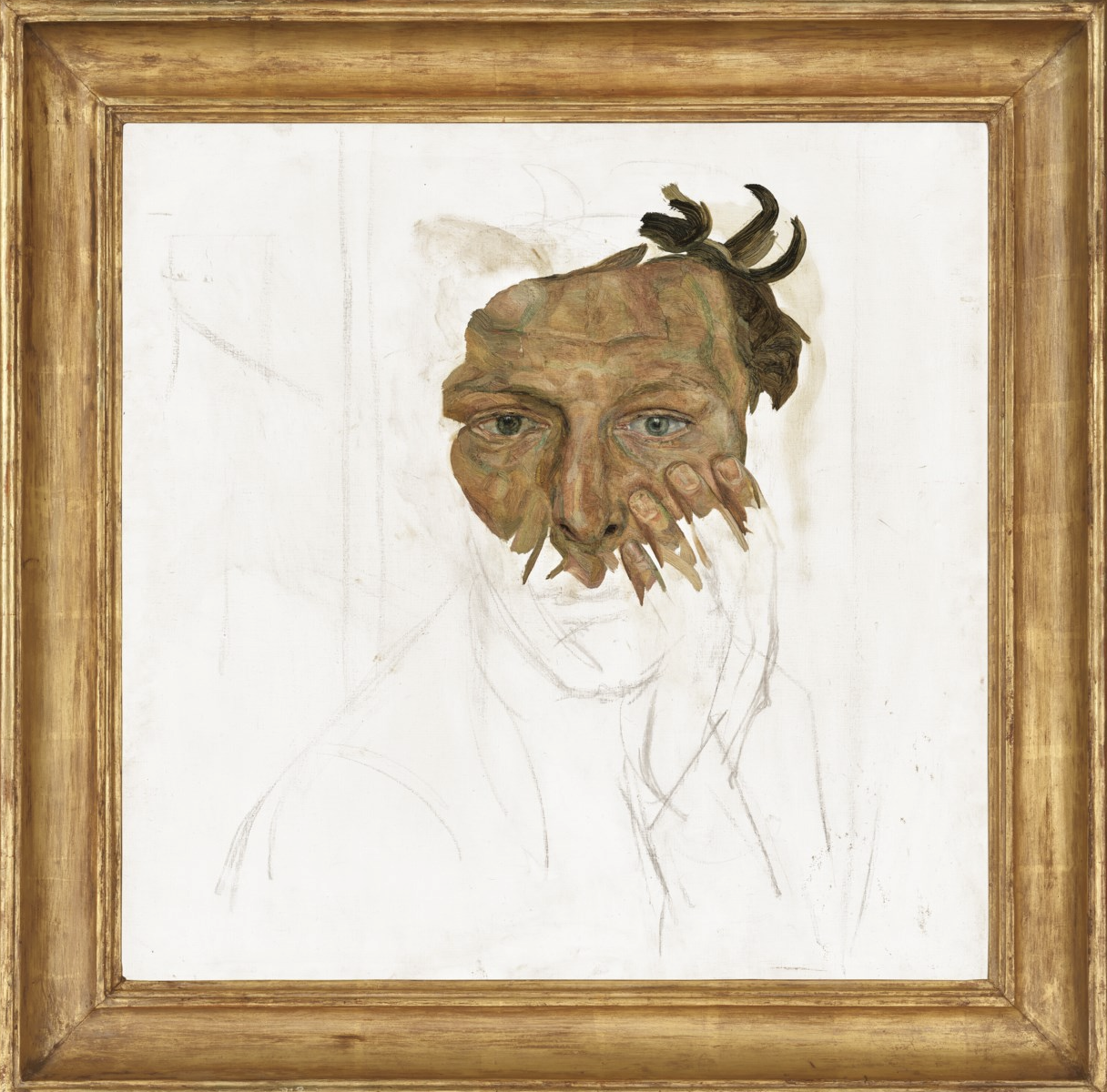
Lucian Freud
In the self portrait, the paint is uneven. Some areas are thick and carefully worked while others thin out and almost disappear into the canvas. The outline never fully closes around the head. The hand touching the face interrupts the view rather than presenting it. It feels less like a stable portrait and more like a figure trying to hold itself together while being observed.
Because of this, looking at the painting feels like you are catching someone in the middle of becoming visible. The more attention you give it, the more uncertain the figure appears. The instability is produced by fading edges, exposed canvas, and the sense that the image could stop at any moment.
The painting has often been read biographically, produced during the breakdown of Freud’s marriage to Caroline Blackwood. Yet beyond personal narrative it suggests a broader psychological state. It almost suggests that visibility is tied to self-awareness. To be seen is to become conscious of being seen. He touches four fingers to his face as if to verify his presence. Toby Treves writes that one can imagine that Freud stopping in shock, as though the figure on the canvas had begun to breathe. The image feels less like a posed self portrait and more like a moment of recognition.
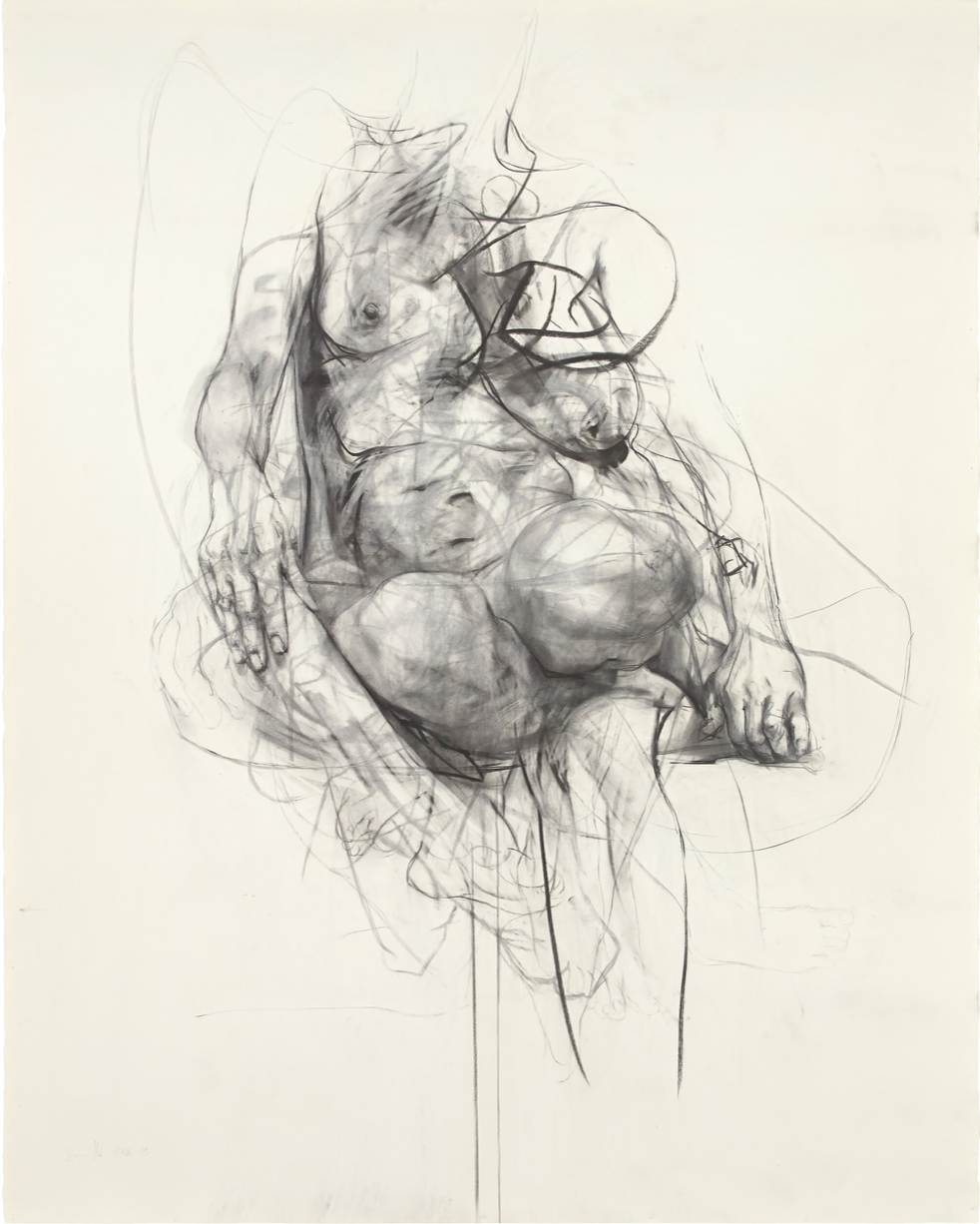
Jenny Saville
Saville, on the other hand, focuses on the idea that the body we see is never neutral. We don’t just look at bodies, we measure them, classify them, idealise them, and try to correct them.
Her charcoal drawings build the body again and again. She redraws over earlier positions so several bodies remain visible at once. Lines are not corrected away but layered. Instead of dissolving, the figure becomes dense and unavoidable. The blank paper around it pushes the body forward, almost into the viewer’s space.
Because there is so much information, the eye keeps searching for a single clear form but cannot settle. You become aware of how you are trying to organise the body, compare proportions, and make sense of it. The discomfort comes from your own looking habits rather than the body disappearing.
So materially they reverse each other. Freud removes certainty through gaps, thin paint, and unfinished edges, making the subject feel fragile under observation.
Saville adds too much certainty through repetition, weight, and scale, making the viewer feel exposed while looking.
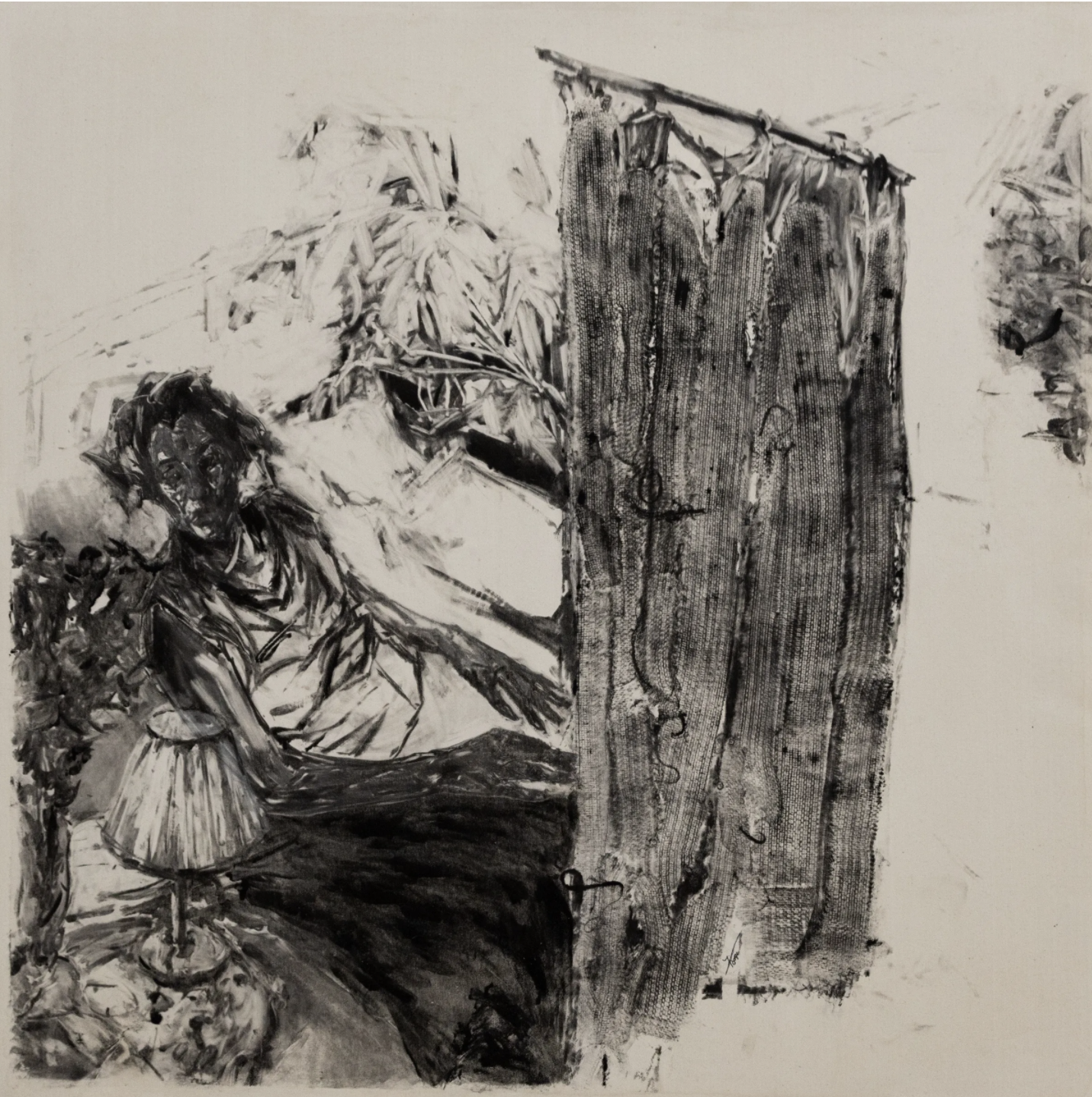
Tiemar Tegene
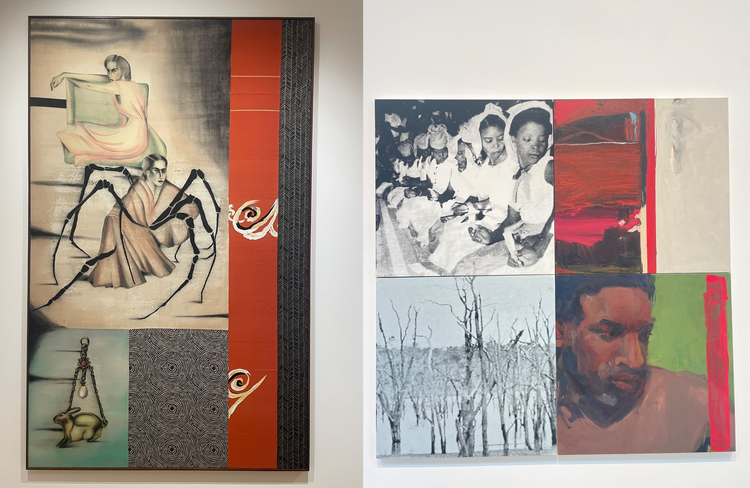
After Freud places instability in the sitter and Saville in the viewer, Tegene moves it into space itself. In the print a dark vertical shape sits in front of the figure. It does not blur the body like Freud, and it does not overwhelm us like Saville. Instead it blocks access. We know the body is there, but we cannot fully reach it visually. Our eye keeps trying to complete it, but the composition refuses.So the figure feels conditional. Not fragile and not overpowering. Just limited.
You are not questioning yourself as a viewer, and the figure is not questioning itself either. Rather, the image behaves like a doorway partly closed. What you see depends on where you stand and what the structure allows.
This changes the meaning of visibility.It is no longer about psychology, being self conscious, or judging bodies. It becomes about permission. The body appears only as much as the surrounding system lets it appear.
That is why the instability moves into the environment. The uncertainty does not come from emotion or perception but from framing. The figure is present, yet structurally interrupted, suggesting that visibility in life also depends on conditions outside the individual, not only on how we feel or how others look.
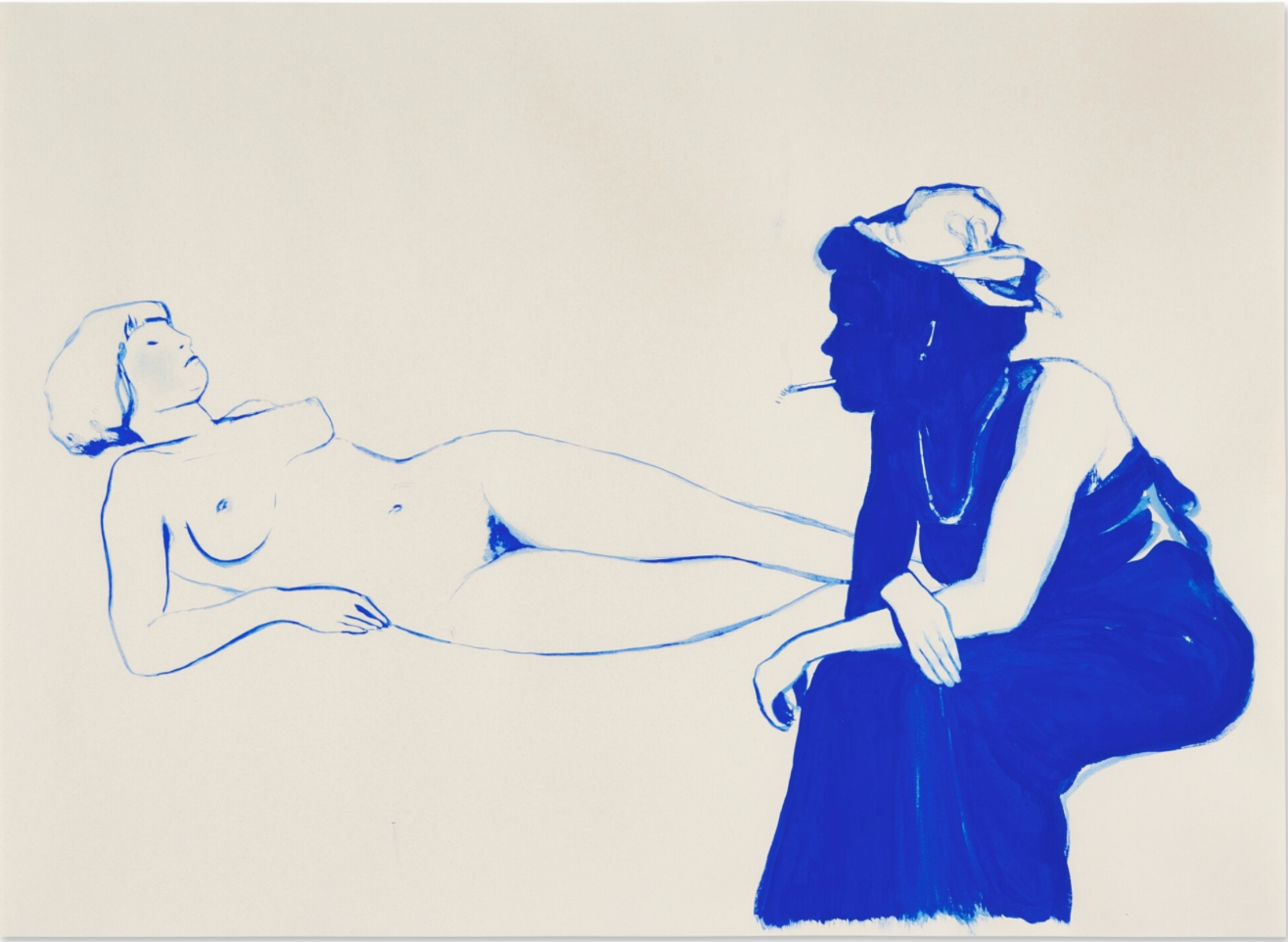
Lisa Brice
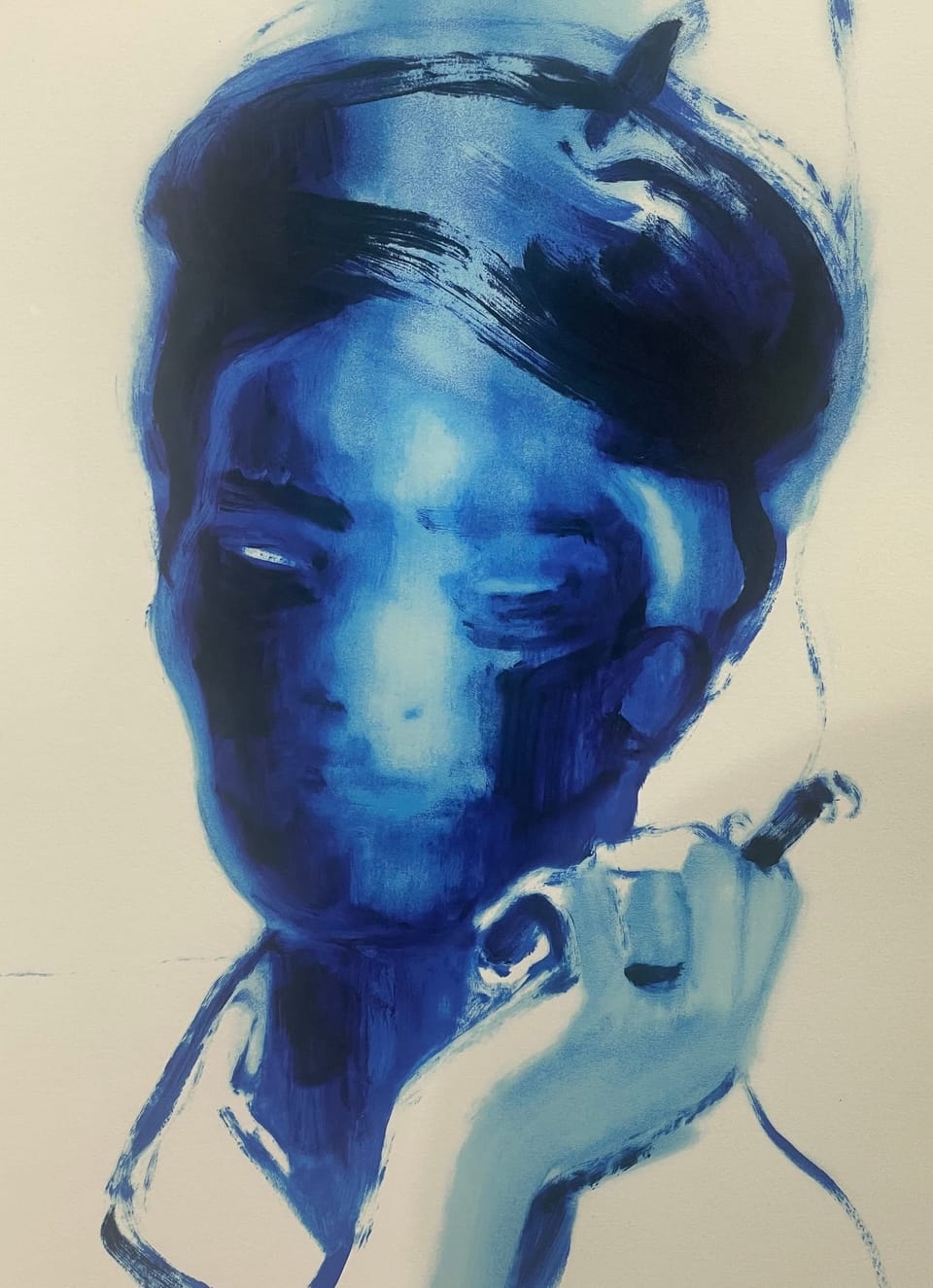
Brice lets the figure decide.You can see this in the difference between the two bodies. One is only lightly outlined and almost fades into the page, which reminds us of Freud’s fragility. But next to it the cobalt blue figure is the opposite. It is clear, flat, and solid, yet we cannot really enter it. There is no modelling, no interior detail, nothing for the eye to examine closely. The body is visible but not open.
Artistically she does this by flattening the figure into colour. Normally painting gives us access through depth, shading, texture, all the things that make us feel we understand a body. Brice removes that access. The figure stays present while refusing inspection.
This matters because she often works from older images where women were meant to be looked at and interpreted by the viewer. Instead of hiding the body, she keeps it visible but controls how much we can know. We are allowed to see, but not to possess visually.
So visibility becomes a choice rather than a condition. The body is neither dissolving like Freud, overwhelming like Saville, nor blocked like Tegene. It is regulating the encounter. In simple terms, the figure is saying: you can look at me, but you cannot fully read me.
Seen together, these works suggest that visibility is not a fixed state but a shifting process. The body does not simply enter view fully formed. It appears through a negotiation between self-awareness, observation, environment and control.
Freud shows the self unsettled by being seen. Saville unsettles the act of seeing itself. Tegene reveals the structures that regulate appearance. Brice allows the figure to determine its own terms of visibility. Across them, the body moves from exposure toward self-possession.
Visibility therefore is not proof of presence, but a continual adjustment between what is revealed and what is withheld.